One candidate rejected your offer and, when pressed, mentioned the interview process seemed a mess. An older employee quits and says no one ever discussed advancement with her. Neither grumbled on Facebook, but both of them just influenced someone else’s perception of your company. That’s your employer brand, whether you’ve worked on it or not.
In the following we explain what exactly employer branding is, how to create one that lasts, how it works at the interview, why it influences who stays and how you can evaluate whether your effort pays off. This is for business owners, HR managers, recruiters and hiring managers.
What Employer Branding Actually Is
Employer branding is the collective answer to a simple question: what’s it like to work there? Current employees answer from experience. Candidates answer from scraps, such as a careers page, a handful of reviews, and a comment from someone’s cousin.
Slogans don’t change that answer much. Behavior does. How your managers respond when a deadline is missed, whether a raise follows a visible logic, how long a payroll question languishes in someone’s inbox. Marketing can tell you all about that later; it can’t generate it.
For that reason, building employer brand strength begins on the inside. Polish comes later.
Why It Matters for Hiring and for Keeping People
When a company has a decent reputation, recruiting gets easier in small ways that add up. Applicants arrive curious rather than skeptical. Recruiters stop spending the first call defending the company. Offers get accepted a bit more often, since the story candidates heard from friends matches what they hear in the room.
It cuts the other way, too. People who like their workplace say so, and they tend to ignore the recruiter messages that land in their inbox. So hiring and retention are really one experience viewed from two sides.
Your talent acquisition data can hint at trouble before anyone admits it. Roles that stay open for months, or finalists who keep choosing someone else, often point back to the brand.
Start With What Employees Really Experience
Before drafting a single sentence of messaging, learn what working at your company is like day to day. Skip the version leadership hopes for and go find the version people live.
Plenty of sources exist. Employee surveys help, especially the free-text comments. So do exit interviews, reviews on Indeed, recruiter notes about declined offers, and the things new hires say caught them off guard.
Expect a mixed picture. A team might be wonderful while growth feels stuck, or pay might be fair while schedules shift without notice. Write both down. Candidates will eventually hear both anyway.
Use this stage to put workplace culture into plain words. “Fast-paced” and “family-like” don’t help anyone decide. What does help is hearing how quickly decisions get made, how much freedom people have, and how feedback is handled when it’s uncomfortable.
What Is an Employer Value Proposition?
An employer value proposition (EVP) is the exchange you’re offering: here’s what we give you, and here’s what we hope you give back. Why would a strong candidate choose you over the competitor down the street, and why would they still be around in three years?
The usual ingredients are compensation and benefits, career development, the nature of the work, the people, and the company values behind tough calls.
Here’s a way to test yours. Imagine a rival pasting your EVP onto their own site. If it would still sound believable, it’s too vague. “Great culture and room to grow” could describe anyone. “New engineers ship code in their first month, and every manager keeps a written growth plan for each report” could only describe you, assuming it’s true.
Which brings up the part people skip. An EVP has to hold on an ordinary Tuesday, not only during the annual celebration.
How to Build an Employer Brand Strategy
A good plan can be simple, as long as someone owns it. Most companies do well following this order:
- Audit your reputation. Read the reviews, compare your careers page against real job posts, and ask recent hires how the job matched what they expected.
- Sketch a candidate persona for each major role group, noting what that person values, where they search, and what worries them about leaving a current job.
- Draft the EVP from what employees say, then test it against what your target candidates want.
- Pick a few channels your personas actually use, such as a LinkedIn company page, your careers site, and whichever job boards matter for your roles.
- Fix the experience behind the message. If the interview process is confusing, repair it before promoting it.
- Assign an owner. Employer brand management goes better when one person, or a small team, coordinates HR, marketing, and hiring managers.
- Choose your metrics and review them each quarter.
Only a couple of those steps produce content. The rest is listening, repairing, and keeping people on the same page.
Showing Your Values at Each Stage of Hiring
People judge you at every touchpoint, so the brand has to survive the entire recruitment funnel, from the first time a stranger sees your name to their first morning on the job. That includes each step of the hiring process along the way.
Awareness
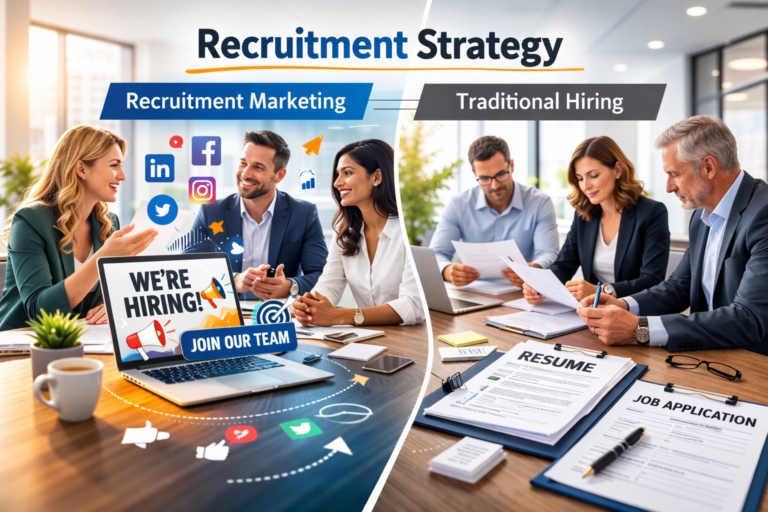
At the top of the funnel, recruitment marketing does the introducing, and it works quite differently from traditional hiring methods. Your LinkedIn company page, careers site, and job posts all speak for you here. Show real employees instead of stock photos, and describe the work as it happens, difficult stretches included.
Application
An applicant tracking system (ATS) can quietly wreck the candidate experience. Picture a thirty-minute form that asks for your work history twice and then goes silent. That tells people plenty about how they’d be treated as employees. Shorten it, make sure it works on a phone, and say what happens next.
Interviews
Interviews are the first real preview of your workplace culture. Had the interviewer read the resume? Did the candidate know the format ahead of time? If respect is on your list of values, a canceled call with no apology cuts against it. A rushed, scripted panel tells candidates more than any careers page could.
Give finalists time with the people they’d work beside, and let the hiring manager explain growth paths and why the role is open.
Offer
Compensation and benefits take center stage now, though clarity matters just as much. Walk the candidate through the entire package, including how reviews, raises, and promotions work. People who see the whole picture feel less misled later, and they accept with fewer doubts.
Onboarding
The first few weeks either back up the story or erase it. Laptops should work. Managers should have a plan. Whatever was promised in interviews should show up on the calendar. Losing someone in month two, after months of recruiting, hurts more than most leaders expect.
Employer Branding Best Practices for Attracting Top Talent
Good habits here fit neatly beside wider hiring strategies for top talent. The ones below separate employers people remember from the ones they scroll past:
- Be specific about hours, team size, and how promotions actually happen. Vague claims get ignored.
- Admit the tradeoffs. Saying a role is demanding attracts people who want that and quietly screens out the rest.
- Let current staff speak for themselves. A teammate describing their week beats a polished brand video.
- Keep the story steady across job posts, recruiter emails, and interview talking points.
- Reply to reviews calmly, because candidates watch how you handle criticism.
- Treat candidates’ time with respect. Fast replies and honest updates count as brand work, even when the answer is no.
- Reflect diversity and inclusion in who’s on your teams and how people are supported, rather than relying on a statement.
None of this needs a large budget, only steady attention and follow-through.
Turning the Brand Into Retention
Hiring someone is only half the job. The other half is making the brand hold after they join, and that’s where employee retention strategies and employer branding overlap.
Consider the full employee lifecycle, from attraction and application to onboarding, development, advancement, and eventually departure. A decent experience at each point backs up the promise you made at the start.
A few areas deserve extra attention.
Employee engagement comes first. Regular check-ins, honest surveys, and visible follow-through keep people invested. Asking for feedback and then ignoring it does more harm than never asking.
Career development matters just as much, since people stay when they can see where they’re headed. Mentoring, stretch assignments, training budgets, and clear promotion criteria all help.
Managers carry more weight than any program. Many exits trace back to a direct supervisor, so training on feedback, recognition, and fairness is money well spent. Pay deserves a regular market check as well, along with plain explanations of how decisions get made. Inclusion shows up in small daily moments, like who receives stretch assignments and whose ideas get heard.
Letting Employees Speak for You
Employee advocacy only works when it’s voluntary. Give people stories worth sharing, make sharing easy, and never script what they say. Some will post online, while others will simply mention the company to a former colleague, which is just as useful.
An employee referral program turns that goodwill into hires. Referred candidates often arrive with a realistic view of the job, because a friend already described it. Keep the program simple, pay rewards on time, and update referrers so they don’t feel forgotten.
How to Measure Employer Branding ROI?
This is where many teams stall. Brand effects spread across several numbers and rarely appear overnight, so no single figure settles the question. Choose a small set of employer branding metrics, track them steadily, and read them together.
Worth watching:
- Application volume and quality, meaning applicants who meet the requirements, not just more of them
- Offer acceptance rate
- Time to fill and cost per hire
- Source of hire, such as referrals, your careers site, and your LinkedIn company page versus paid channels
- Turnover during the first year
- Engagement and retention scores across teams
- Candidate feedback after interviews, including from people you didn’t hire
- Review ratings and what reviewers keep mentioning
For a ballpark return estimate, compare your content and tool/ team-based spend to hires, vacancy length, and turnover. Go easy on attribution, as many of those things tend to get better together. A ballpark estimate you are confident in is better than a precise number no one believes.
Define a starting point so you can compare in six or 12 months, and compare your metrics with the latest US hiring trends so a market change doesn’t get confused with your brand wins.
Common Mistakes to Avoid
The same errors keep creeping up. They preach a culture that’s not lived. They view employer branding as a one-off campaign. HR, marketing and hiring managers operate in silos. There’s no response to negative reviews, and no one tracking anything, so everyone is guessing.
Little companies get caught in them as much as large ones: a brand’s just another person’s job. It isn’t. Any work that involves hiring belongs to everyone who does the hiring.
Conclusion
A strong employer brand doesn’t come from a campaign. It comes from running a workplace people would honestly recommend, then describing it in specific, believable terms. Start with the real employee experience, write an EVP you can keep, fix weak spots in hiring and onboarding, and track a few metrics over time. Building employer brand trust is slow, but every fair promotion, good hire, and honest reply to a review adds a little. Start this month with one honest audit, then let the findings point to the next fix.