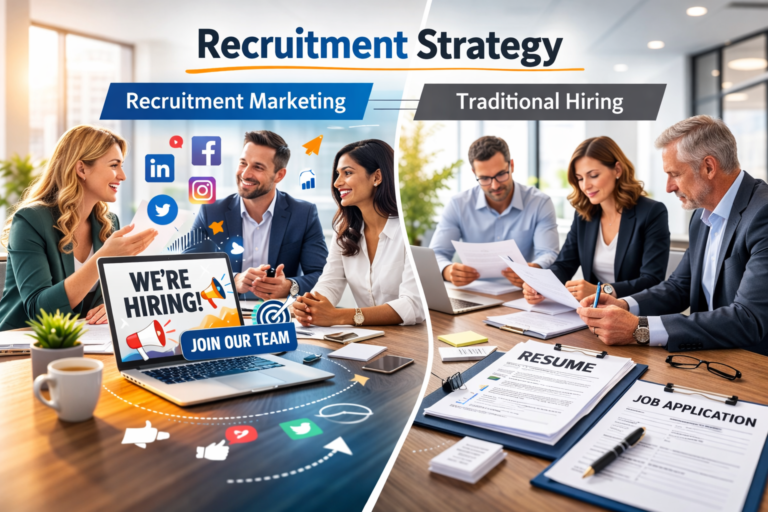
The hiring process is one of the most challenging and resource-intensive tasks HR departments face. Whether it’s sifting through hundreds of resumes, conducting multiple rounds of interviews, or dealing with the uncertainty of making the right hire, recruitment can often feel overwhelming.
However, hybrid recruiting is helping to address many of these pain points by combining traditional methods with modern technology to streamline the process, speed up hiring, and improve overall outcomes.
In this blog, we will learn how hybrid recruiting works and what it has to offer to the HR teams.
What is Hybrid Recruiting?
Hybrid recruiting is a blend of both digital and traditional recruitment methods. It leverages modern tools, technologies, and platforms to streamline the recruitment process while retaining the personal touch and relationship-building elements that traditional recruiting offers. The goal is to create a more efficient and flexible hiring process by incorporating automation and advanced technology with personalized human interaction.
In essence, hybrid recruiting works by utilizing a mix of digital platforms, AI-driven tools, and automation, combined with the expertise of seasoned recruiters. This fusion allows for a faster, more efficient hiring process that is tailored to each company’s unique needs.
Here is your revised content with the provided keywords included naturally:
How Hybrid Recruiting Overcomes Traditional Hiring Challenges
1. Slow Hiring Process
Traditional hiring processes can be slow due to the reliance on manual resume screening, scheduling interviews, and conducting in-person meetings. The entire process often takes weeks, which can result in losing top talent to competitors.
How Hybrid Helps:
Hybrid recruiting uses automation tools to streamline initial screenings, such as AI-powered resume parsing and automated interview scheduling. This reduces the time spent on administrative tasks, enabling faster responses to candidates. For example, automated screening tools can quickly assess thousands of resumes, narrowing down the candidate pool in a fraction of the time it would take manually. This leads to faster hiring methods, reducing the overall hiring timeline by 30%.
Example: A company that uses AI screening can quickly identify candidates with the right skills and qualifications, leading to faster decisions and reducing the overall hiring timeline by 30%.
2. Limited Candidate Pool
Relying on a few job boards, word of mouth, or local advertising can limit the reach to potential candidates, particularly for specialized roles or remote positions. Traditional hiring often doesn’t take advantage of broader talent pools.
How Hybrid Helps:
Hybrid recruiting leverages digital platforms, social media, and AI-powered sourcing tools to cast a wider net and identify both active and passive candidates. This ensures a larger and more diverse pool of applicants, including global talent for remote positions, making the process a modern talent search that taps into a broader range of potential hires.
Example: A company seeking a niche skill can use platforms like LinkedIn and GitHub, alongside automated AI tools, to identify high-quality candidates globally, expanding their search far beyond local candidates.
3. High Recruitment Costs
Traditional recruiting methods can be expensive, especially when outsourcing to staffing agencies or spending on advertising across multiple platforms. Additionally, the time spent by HR staff on administrative tasks adds to the cost.
How Hybrid Helps:
Hybrid recruiting reduces costs by automating many of the manual tasks like resume screening, initial candidate communications, and interview scheduling. This allows HR teams to focus on more strategic activities rather than administrative burdens, resulting in fewer resources spent per hire. The balanced recruitment model helps optimize cost efficiency by merging technology with traditional practices.
Example: A business can use a hybrid recruiting model where an automation system filter resumes, conducts initial assessments, and schedules interviews, allowing HR to spend fewer hours on repetitive tasks and reducing recruitment agency fees.
4. Inconsistent Candidate Experience
Candidates often face inconsistent communication during traditional hiring processes. Delayed responses, lack of transparency, or uncoordinated interview schedules can leave candidates feeling uncertain and unvalued.
How Hybrid Helps:
In hybrid recruiting, automated communications ensure that candidates receive timely responses and updates. Scheduling software allows candidates to book interviews based on their availability, reducing the chance of missed or delayed interviews. This consistency improves the overall candidate experience and helps establish a smart hiring process.
Example: A candidate applying through a hybrid system receives immediate confirmation of their application, followed by automated scheduling links for interviews, making the process smoother and more professional.
5. Overwhelming Manual Workload
Manual tasks such as reviewing large volumes of resumes, scheduling interviews, and following up with candidates can overwhelm HR staff and lead to burnout, especially in high-volume hiring situations.
How Hybrid Helps:
Hybrid recruiting uses automation to take over repetitive tasks, allowing HR teams to focus on more strategic decisions, like selecting candidates for interviews and conducting final assessments. AI tools can also assist in managing applicant tracking systems (ATS) and candidate databases, allowing for a more tech-driven recruiting approach.
Example: A company hiring for multiple positions simultaneously can rely on AI tools to filter out unqualified candidates and prioritize top prospects. This helps HR teams manage a high volume of applications without feeling overwhelmed.
6. Poor Candidate-Job Fit
Traditional methods, which often depend on personal impressions from in-person interviews or unstructured evaluations, can lead to poor candidate-job fit. Sometimes, hiring decisions are made based on a limited assessment of candidates.
How Hybrid Helps:
Hybrid recruiting combines digital tools like skills assessments, psychometric tests, and data analytics with recruiter interviews to assess candidates more comprehensively. This results in a better understanding of a candidate’s fit for both the role and the company culture, leading to a blended hiring team approach where data and human judgment work in tandem.
Example: A company using hybrid methods might conduct personality and skills assessments through a digital platform before interviews, ensuring they are only considering candidates who match the job requirements and company culture, reducing the risk of poor hires.
7. Lack of Data-Driven Decisions
Traditional hiring often relies on subjective judgment and intuition, which can lead to bias and inconsistent decision-making.
How Hybrid Helps:
In hybrid recruiting, data analytics and AI tools provide valuable insights into candidate performance, skills, and potential. This allows HR teams to make more informed and objective hiring decisions, reducing the impact of unconscious bias. This shift toward a tech-driven recruiting model ensures that hiring decisions are data-supported and fair.
Example: A recruiter can use AI to analyze data from past hires, identifying patterns that indicate which candidate characteristics lead to success in the role. This helps improve the accuracy of future hiring decisions.
8. Inability to Scale Quickly
Traditional hiring methods are often slow to scale, particularly when businesses need to hire quickly or ramp up hiring efforts for new projects or roles.
How Hybrid Helps:
Hybrid recruiting enables quick scaling by using automated processes and digital platforms that can handle a large influx of applications. With AI-driven tools, companies can screen and assess thousands of applications without needing a large HR team, offering a flexible hiring approach that adapts to your company’s needs.
Example: During a product launch, a company using a hybrid approach can scale its hiring process quickly by automating resume screening and initial interviews, allowing them to hire a large number of employees in a short time.
Summing Up
By integrating the strengths of both traditional and digital methods, hybrid recruiting helps companies overcome the limitations of traditional hiring, enabling them to work faster, smarter, and more efficiently. The hybrid recruiting benefits make it a powerful tool for companies looking to adopt a more agile and efficient recruitment process.